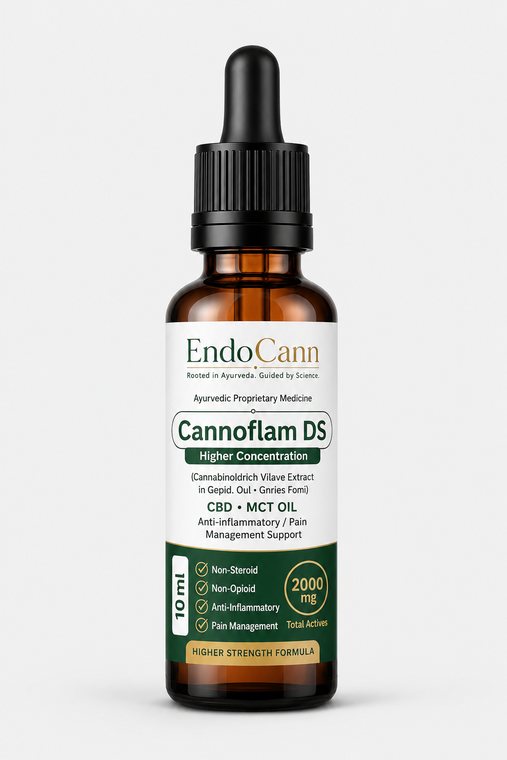
Pain & Inflammation
Clinical positioning
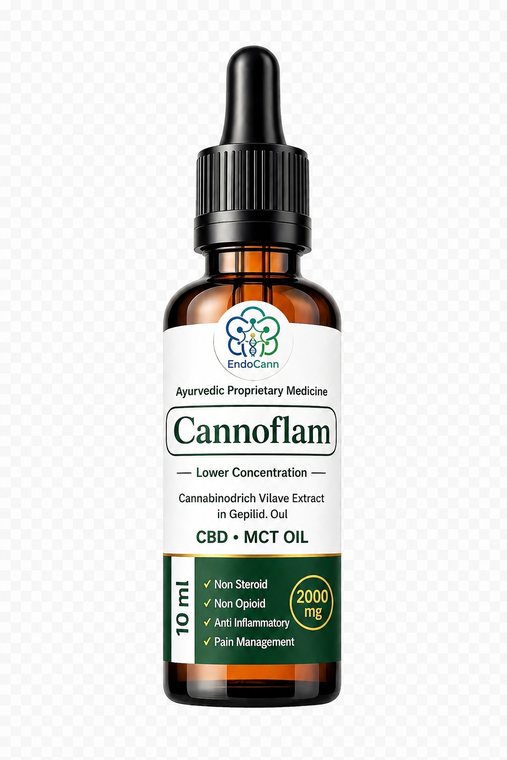
Higher concentration cannabinoid-rich oil for escalation under physician supervision.
Clinical use lens
Higher-load escalation optionUse when the doctor wants a stronger cannabinoid load with closer titration and review.
Protocol mapping
Indication fit
Higher pain burden
Joint discomfort
Neuropathic pain support
Titration use
Why doctors reach for it
Clinical highlights
✦Higher concentration: escalation option when lower strength is insufficient
✓Pain signalling: CB1/CB2, TRPV1 and inflammatory mediator support
→Physician titration: useful where close review and dose adjustment are planned
How it is positioned to work
Mechanism map
1Higher cannabinoid load for dose escalation under supervision
2CB2 immune modulation and neuroinflammatory signalling support
3MCT/coconut oil carrier supports titrated delivery
Physician-directed dosing
Administration & dosing
X
Dose framework
X = body weight in kilogramsFirst dose
≤ X/2 mgGrade-guided range
X–10X mg
≤ X/2 mgGrade-guided range
X–10X mg
First dose must never exceed X/2 mg total cannabinoids (equivalent to ≤0.5 mg/kg when X is body weight in kg). Further titration may move within X to 10X mg total cannabinoids only after tolerance and response review.
1–10
Indication grade
- Grade 1–10: set by indication severity, pain/inflammation burden, ESR, CRP and symptom trajectory.
- Adjust for age, frailty, secondary conditions, hepatic/renal risk, concurrent medicines and tolerance.
- Use follow-up response to hold, increase, reduce or discontinue.
↗
Titration model
- Incremental: gradual upward titration until response / tolerability.
- Incremental–decremental: step up, then reduce to minimum effective maintenance.
- Microdosing: very low divided exposure for sensitive, elderly or polypharmacy patients.
Rx
Administration
- Oral / sublingual / with suitable carrier as per physician direction and product format.
- Prefer consistent timing; document relation to food, sleep, pain peak, appetite or protocol goal.
- Document dose, route, time, food/carrier, indication grade, ESR/CRP or relevant markers, adverse effects and follow-up plan.
- Monitor sedation, dizziness, GI tolerance, cognition, drug interactions and functional response.
Full titration walkthrough: physician dosage guide.
In-clinic use
Doctor use notes & safety boundary
Doctor use notes
- Start low and titrate by clinical context, tolerability and symptom severity.
- Track response, co-medications, sedation, GI tolerance and follow-up outcome.
- Document dose, timing, duration, indication and review plan.
Safety boundary
- For registered medical practitioners only
- Select dose by clinical context and tolerability
- Monitor sedation, interactions and follow-up response
- Not for direct patient promotion
2 actives
Formula / ingredients
| Ingredient | Botanical / base | Part | Qty |
|---|---|---|---|
| Vijaya leaves | Cannabis Sativa Linn | Leaves | 20% |
| Coconut Oil | Cocos Nucifera | — | 80% |
Clinic packs
Pack / MRP
| Pack | Strength | MRP |
|---|---|---|
| 10 ml (2 g) | 2000mg total cannabinoids≈ 10 mg/drop | ₹999 |
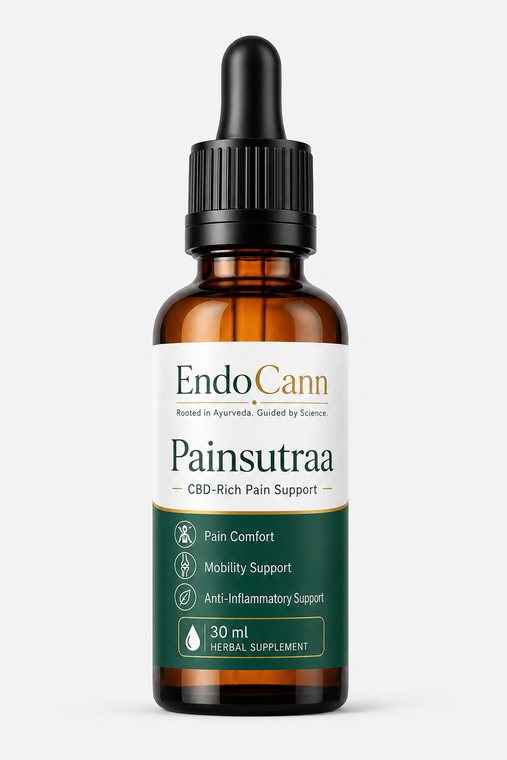
| 30 ml (6 g) | 6000mg total cannabinoids≈ 10 mg/drop | ₹2,200 |
Pack / MRP summary: 10 ml (2 g) ₹999 (2000mg) · 30 ml (6 g) ₹2,200 (6000mg)
4 source links
Audited research links
| Audited reference fit | Clinical logic | Source |
|---|---|---|
| Full-spectrum cannabis extract ✓ Pain/inflammation checkedPubMed / PMIDIngredient rationale Cannabis-based medicines and pain: a review of potential synergistic and entourage effects | Full-spectrum/entourage context for pain-support discussion | Open ↗ |
| Full-spectrum cannabis extract ✓ Pain/inflammation checkedPubMed / PMIDIngredient rationale Full-Spectrum Cannabis Extract in Treatment of Neuropathic Pain | Neuropathic pain evidence context | Open ↗ |
| CBD ✓ Pain/inflammation checkedPMC full textMechanistic rationale CBD for Pain Treatment: Focus on Pharmacology and Mechanism of Action | Pain mechanism pharmacology | Open ↗ |
| CBD / THC / full spectrum ✓ Pain/inflammation checkedPMC full textMechanistic rationale Medical Cannabis Activity Against Inflammation: Active Compounds and Mechanisms | Anti-inflammatory active-compound mechanisms | Open ↗ |
Educational use only. Doctor-facing scientific aid only. Research links are mapped for ingredient rationale, mechanism, clinical context and safety boundaries. This brochure does not replace diagnosis, standard-of-care treatment, regulatory prescribing rules or clinical monitoring. See our legal & medical disclaimer and editorial policy.
Same protocol